What is this test?
Impulse Oscillometry (IOS) is an advanced, non-invasive lung function test that evaluates resistance and reactance within the respiratory system. Unlike spirometry, it is performed during normal quiet breathing, making it suitable for patients who find forced breathing manoeuvres difficult.
Why is it done?
IOS provides information about: small-airway disease, upper and lower airway resistance, respiratory system mechanics, and complementary information in patients with asthma or COPD where standard spirometry may be insufficient.
Who may benefit?
- Patients with asthma, particularly where small-airway involvement is suspected
- COPD assessment
- Patients who find spirometry difficult (elderly, children)
- When additional physiological information is required beyond spirometry
How is it performed?
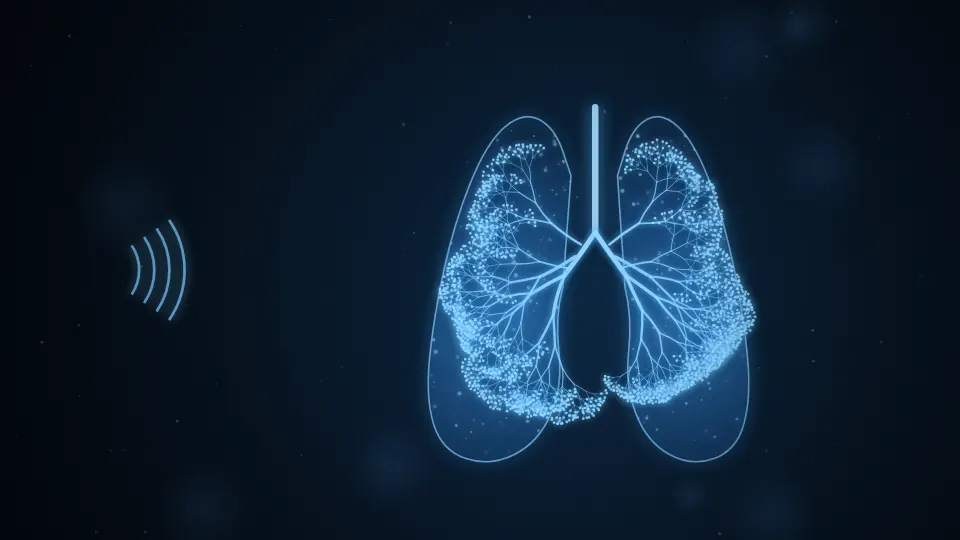
You simply breathe normally through a mouthpiece while small sound waves (impulse oscillations) are transmitted into the airways. The technique is comfortable and requires minimal patient effort.
Patient Preparation
Breathe normally through the mouthpiece. No special effort required. Follow instructions about inhalers if advised. Avoid heavy exercise before testing.
What information does it provide?
IOS provides measurements of resistance (R5, R20), reactance (X5) and resonant frequency. Increased peripheral resistance and negative reactance at low frequencies suggest small-airway disease.