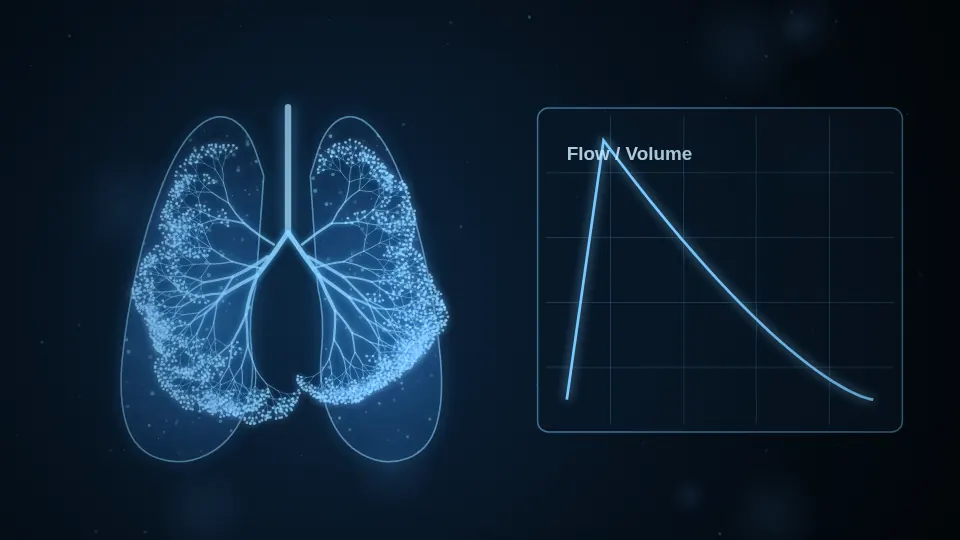
What is this test?
Spirometry is the key lung function test that measures how much air you can breathe in and out, and how rapidly air can be expelled from the lungs. It is the cornerstone test for diagnosing and monitoring respiratory conditions.
Why is it done?
Spirometry is used to: diagnose asthma and COPD, assess severity of lung disease, monitor treatment response, evaluate breathlessness and persistent cough, and assess respiratory fitness before surgery.
Who may benefit?
- Patients with breathlessness on exertion
- Patients with persistent or recurrent cough
- Smokers aged 40 and above
- Patients with known asthma or COPD (for monitoring)
- Pre-operative assessment
How is it performed?
You will be asked to breathe in as deeply as possible, then blow out as fast and as hard as you can into a mouthpiece connected to the spirometer. The test is repeated several times to ensure reliable results.
Patient Preparation
Wear comfortable, non-restrictive clothing. Avoid strenuous exercise immediately before testing. Do not smoke on the day of the test. Follow your doctor's specific instructions regarding inhalers before the test.
What information does it provide?
Spirometry provides measures including FEV1 (air expelled in 1 second), FVC (total air expelled) and the FEV1/FVC ratio, which distinguish between obstructive and restrictive patterns.